
Blog
RRMSH
August 18, 2026
Type 1 vs Type 2 Diabetes: Understanding the Key Differences
Diabetes is a serious health problem that affects how the body utilizes food. When we eat, food is converted into sugar, and the pancreas makes insulin. Insulin is a kind of hormone that allows sugar to go into the body’s cells. When this system doesn’t work the way it should, sugar accumulates in the blood.
Diabetes is generally divided into two types: type 1 diabetes and type 2 diabetes. Both cause high blood sugar, but they are different. Knowing what these are helps you get the diabetes care you need.
What Is Type 1 Diabetes?
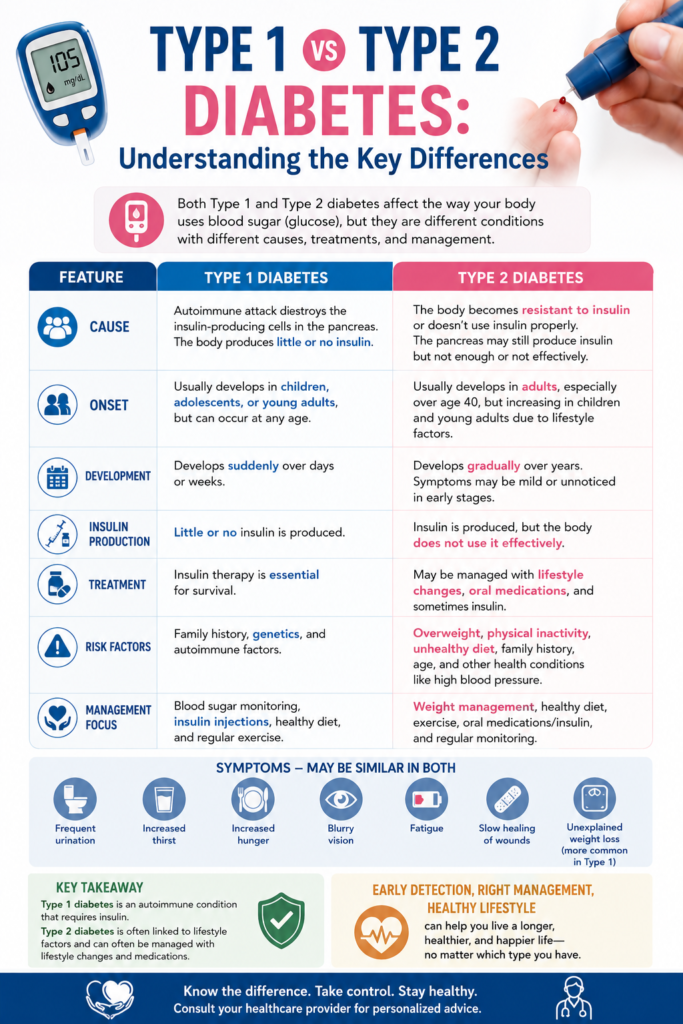
Your immune system destroys healthy pancreas cells in type 1 diabetes. Your immune cells mistake them for fatally dangerous invaders and eradicate them. Your body stops making insulin outright.
Doctors find most type 1 diabetes in children and young adults. However, it can occur at any age. People with this form of the condition must take insulin daily to survive. Your food and activity choices don’t cause it, and you can’t prevent it.
What Is Type 2 Diabetes?
In type 2 diabetes, your body still produces insulin, but your cells ignore it. Insulin resistance is the name given to this condition. In this case, the body generates an excess of insulin, and yet sugar is unable to leave the blood stream.
This is the type of diabetes most frequently experienced by people. The majority of patients are older than 45 years of age, though today even younger people are diagnosed with diabetes. Healthy eating, exercising daily, and maintaining normal weight prevent this disease.
Comparing Both Conditions
Feature | Type 1 Diabetes | Type 2 Diabetes |
Main Cause | Immune system destroys pancreas cells | Cells resist insulin and pancreas gets weak |
Prevention | Cannot be prevented | Can be delayed or prevented with habits |
Age Found | Mostly in kids and young adults | Mostly in adults over 45 |
Symptom Speed | Starts fast over a few weeks | Starts slowly over many years |
Insulin Need | Requires daily insulin for life | Uses diet, pills, or insulin if needed |
Main Diabetes Causes
Knowing the distinct diabetes causes explains why doctors treat each condition differently.
- Factors related to type 1
Genes: Inheriting genes from family members leads to an increase in risk.
Factors: Viruses and environmental factors can cause the body’s immune system to attack its own tissues.
- Factors related to type 2
Insulin resistance: Cells become less responsive to insulin over time.
Obesity and inactivity: Excess weight and sedentary living increases risk.
Family history: A family history of elevated blood sugar plays a role in this type of diabetes.
Symptoms to Look For
Both conditions share common signs from high blood sugar:
- Feeling very thirsty and urinating often
- Feeling tired and hungry
- Having blurry vision
- Having slow-healing cuts
Symptoms of type 1 diabetes show up fast and feel strong. Symptoms of type 2 diabetes grow slowly over years. Many people do not notice signs until a regular doctor visit.
Managing Your Condition
Good diabetes management keeps blood sugar in a safe range and protects your heart, eyes, and kidneys.
1. Managing Type 1
- Take insulin shots or use an insulin pump every day.
- Check blood sugar levels often with a monitor.
- Count food carbs to match your insulin doses correctly.
2. Managing Type 2
- Eat balanced meals with high fiber and low processed sugar.
- Exercise regularly to help your cells use sugar better.
- Take prescription pills or insulin shots if your doctor advises it.
Getting Proper Diabetes Care
Living with high blood sugar requires support. Good diabetes care helps you balance food, exercise, and medicine.
At RRMCH our doctors and dietitians walk you through every step. We build treatment plans that fit your life. Early checkups prevent long-term health issues and keep your energy level high.
Routine tests, good diabetes care, easy eating habits, and exercise keep you healthy. Reach out to your health team to keep your diabetes plan on track.
Staying Healthy Long Term
Early action makes a difference in your daily life. Controlling your blood sugar protects your eyes, nerves and heart.
Good daily choices support your treatment plan. Eating whole foods, walking daily, and getting regular blood tests keep you strong. Reliable diabetes care gives you the tools to stay active.
 Visit RRMSH today and take the first step toward better health and wellness.
FAQs:
No. Type 1 is caused by an immune attack. Type 2 is caused by insulin resistance. Type 2 will never become type 1, even if you start being treated with insulin.
Genes do play a small role in type 1 diabetes, but most people don’t have a family history. A virus, or other external trigger, usually brings it on.
You can really put type 2 diabetes into remission, which is normal blood sugar without taking medications. Remission can be achieved with weight loss, healthy eating, and daily physical activity.
A good diet helps prevent type 2 diabetes by keeping cells sensitive to insulin. Diet cannot prevent type 1 diabetes because immune system actions cause it.