
Blog
RRMSH
August 13, 2026
Common Gynecological Problems Every Woman Should Know About
Being healthy is the first step to a happy life. However many women postpone seeing a doctor for female health complaints. Mild abdominal pain, irregular periods or a sudden change of mood are all can be ignored. Many see these issues as part of normal life. Being aware of the condition of your body is crucial to detecting diseases early before they become worse.
Your body goes through drastic changes as you age. Understanding Common Gynecological Problems helps you maintain your overall women’s health. The best medical facilities such as Raadha Rajendran Multispeciality Hospital (RRMSH) emphasize early detection and early treatment. By having regular check-ups, you can maintain your active and healthy lifestyle.
What Are Gynecological Problems?
Women can have health problems that affect the system. The reproductive system in women is made up of the uterus, ovaries, fallopian tubes and vagina. Gynecological problems can be mild. These gynecological problems can go away quickly. Others need medical care, medicine, or simple daily changes.
Understanding these issues helps you speak openly with your doctor. You can get the right care without fear or long delays.
Most Common Gynecological Problems
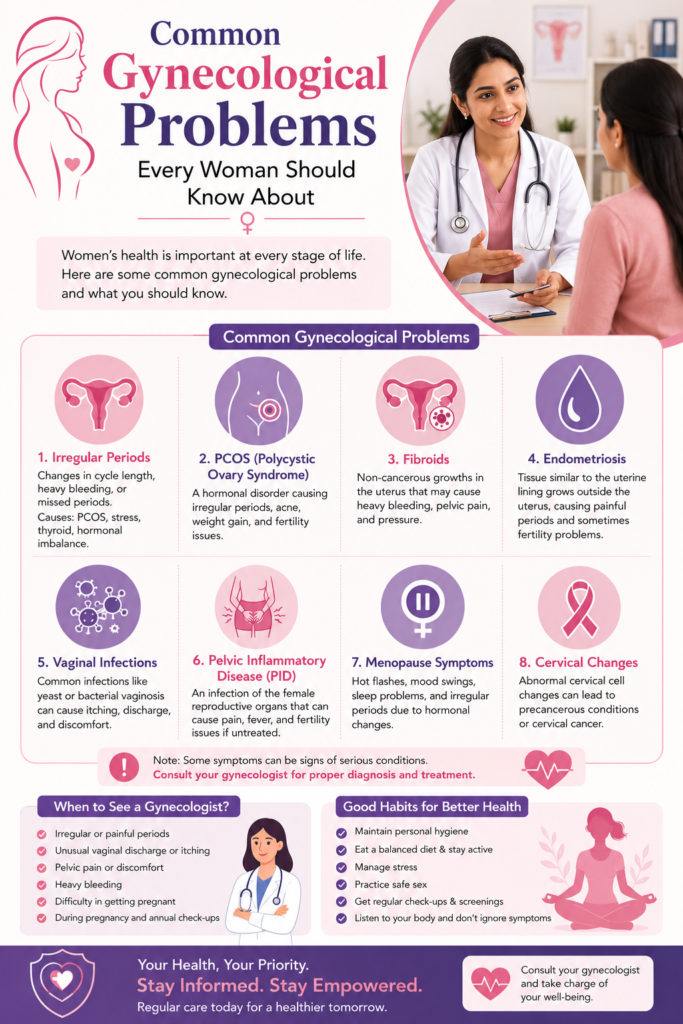
1. Polycystic Ovary Syndrome (PCOS)
Polycystic Ovary Syndrome, or PCOS, is a leading cause of hormonal problems in women. Ovaries produce too many male hormones. The ovaries develop small cysts filled with fluid.
Common PCOS Symptoms:
Irregular Periods: The periods are irregular or very heavy.
Weight Gain: Gain weight in the midsection is frequent.
Acne and Excess Hair: Too many hormones lead to oiliness of the skin, acne, and excessive body hair.
2. Period Disorders
Every woman has a unique cycle. But big changes in timing, pain, or blood flow signal a real health issue.
- Severe Period Pain: Mild cramps are normal. Pain that stops your daily work is not.
- Very Heavy Bleeding: Bleeding for over seven days is a warning sign. So is changing pads every hour.
- Missing Periods: Missing your cycle for three months in a row needs a doctor’s check.
- Unsteady Cycles: Cycles shorter than 21 days or longer than 35 days are abnormal.
Causes: Period issues come from hormone changes, thyroid problems, stress, or fast weight changes. Non-cancer growths in the uterus can cause them too.
3. Endometriosis
The problem is when uterine tissue grows out of the uterus. It is common for it to grow on the ovaries, tubes, and pelvic wall.
Important Symptoms:
- Severe pelvic pain throughout your period.
- Pain when you have sex and after.
- Pain when you pee or have to go to the bathroom during your period.
- Problems becoming pregnant.
How to Deal With It: The earlier sufferers find it, the lesser the chances of long-term pain and fertility loss. Doctors use basic pain pills, hormones, or basic surgery.
4. Uterine Fibroids
Fibroids are non-cancerous lumps that grow in the uterus wall. They are common in 30s-40s.
Important Symptoms:
- Heavy or long periods.
- Pressure or pain in your lower back and belly.
- Going to the bathroom frequently.
- A full/bulky belly.
How to Deal With It: How doctors treat it depends on the size and number of fibroids. Doctors use advanced pills and safe surgery to remove them.
5. Vaginal Infections and PID
Vaginal changes occur to most women at some point in their lives.
- Yeast infections are caused by a type of fungus that grows much. This fungus creates a lot of itchiness and a thick white discharge.
- Pelvic Inflammatory Disease or PID is when the infection spreads to the organs. PID can cause a lot of pain in the belly, a fever and scarring, inside the body.
How to Deal With It: The most basic infections are treated with basic medicines and go away quickly. Treating such infections early may prevent dangerous conditions like PID.
6. Bladder Issues and Muscle Weakness
Bladder infections closely tie into female health care. Birth or growing older can also weaken pelvic floor muscles. This weakening causes organ sagging and urine leaks.
Key Signs:
- Burning feeling when you pee.
- Strong, sudden need to pee often.
- Heavy pressure in your lower belly.
Warning Signs You Should Never Ignore
Your body tells you when something is wrong. Call a doctor right away if you notice any of these signs:
- Sudden or severe belly pain.
- Bleeding between periods or after sex.
- Smelly or odd-colored discharge with bad itching.
- Pain during sexual activity.
- Long-lasting belly bloating or full feelings.
- Constantly missing your monthly cycle.
Daily Steps for Great Health
Good health takes daily care and regular checks. To stay healthy you should get a health checkup. These regular checks help doctors catch issues early.
- Get screenings too. These basic tests check for cell changes before cancer starts.
- To live a life you should eat fresh foods, drink water, sleep well and move around every day to keep your hormones stable.
- You should also use hygiene. Avoid using soaps or scented sprays that can harm your natural body balance.
When you need care choose expert care. Clinics like Raadha Rajendran Multispecialty Hospital (RRMSH) offer care for every age stage.
Final Words
Your health should always come first. Many gynecological problems are common and easy to fix when caught early. Pay close attention to your body and visit skilled doctors at centers like RRMSH for care.
 Visit RRMSH today and take the first step toward better health and wellness.
FAQs:
Young women often have problems like periods and pain. They also get PCOS and bladder infections. Some women get acne. These are all gynecological problems that young women experience.
If you have periods it does not mean you have PCOS for sure. A doctor needs to check you for things like missed periods and increased hair growth. The doctor will also check if you have gained weight and if you have cysts.
If you have problems, like PCOS or endometriosis it can be harder to get pregnant. Pelvic infections and fibroids can also cause problems. So it is very important to get these problems checked by a doctor. This will help you get pregnant when you want to have a baby.