Blog
RRMSH
October 10, 2026
Breast Cancer Symptoms: 10 Warning Signs Women Should Know
A small change in your breast can feel scary. Many women notice something odd and wait. They hope it will go away. Some wait for months. But early action can save lives. Knowing the breast cancer symptoms is the first step. This guide from Raadha Rajendran Hospital explains 10 warning signs in plain words. It also tells you when to see a doctor and what tests to expect.
Why Early Detection Matters
Breast cancer is one of the most common cancers in women. When doctors find it early, treatment works better. The cancer is often small and has not spread. That means simpler care, smaller surgery and faster healing.
Many women feel no pain at first. That is why you need to know your own body. Check how your breasts look and feel each month. Then you will spot a change fast.
10 Breast Cancer Symptoms to Watch For
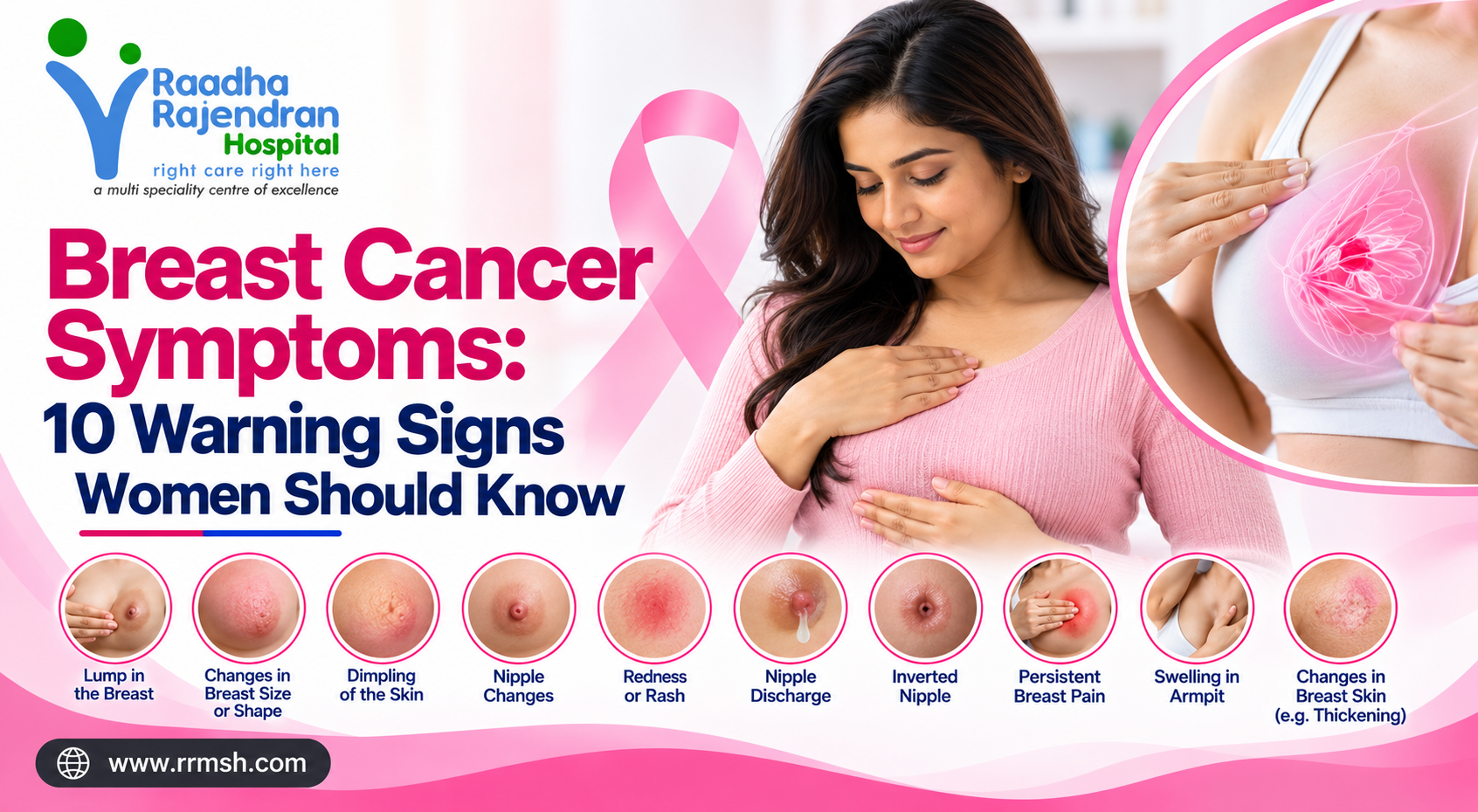
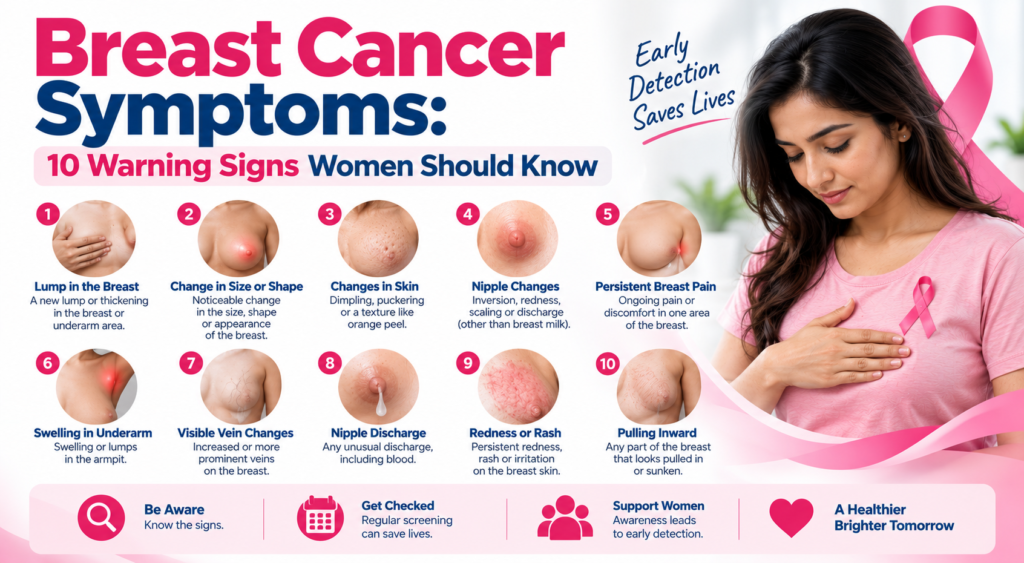
These are the breast cancer signs doctors ask every woman to look for. One sign alone does not mean cancer. But each one deserves a check.
1. A New Lump in the Breast
A breast lump is the best-known warning. It may feel hard, like a small stone. The edges are often uneven. Some lumps feel soft or round. Most lumps are not cancer, but only a doctor can tell. Get every new lump checked.
2. Swelling Under the Arm
Breast tissue reaches up to the armpit. Cancer cells can travel to the lymph nodes there. You may feel a hard knot or swelling under your arm or near your collarbone. Do not ignore it, even if your breast feels normal.
3. A Change in Size or Shape
One breast may grow bigger or hang lower than before. Small size differences are normal. A sudden change is not. Stand before a mirror with your arms down, then raised. Compare both sides.
4. Dimpling or Puckering of the Skin
Skin that looks like an orange peel is a warning sign. You may see small dips, folds or pits. This can happen when a growth pulls on the tissue under the skin.
5. Redness, Rash or Scaly Skin
Red, warm or swollen skin can point to a rare type of cancer. The skin may look thick and feel itchy or sore. Many people think it is an infection. If it does not clear in two weeks, see a doctor.
6. Nipple Changes
Watch for a nipple that turns inward, flakes or cracks. These nipple changes are easy to miss. A nipple that has always been inverted is normal. A new change is not.
7. Fluid from the Nipple
Fluid that is not breast milk needs a check. Blood-stained fluid is a red flag. So is clear fluid that leaks on its own from one nipple.
8. Pain That Stays in One Spot
Breast pain often links to periods and is rarely cancer. But pain in one spot that lasts for weeks needs a check. Pain in the nipple counts too.
9. A Breast That Feels or Looks Different
One breast may feel warmer, heavier or harder than the other. Veins on one side may look clearer than before. Trust your eyes and your hands.
10. Thickening Without a Clear Lump
Sometimes you feel a firm, thick patch instead of a lump. It may feel like a rope or a ridge under the skin. Do not wait for it to grow into a lump.
Who Is at Higher Risk?
Anyone can get breast cancer. The risk rises with age, mostly after 40. Tell your doctor if your mother, sister or daughter had it. Other risks include long use of hormone pills, alcohol, extra weight and little exercise. Men can get it too, but it is rare. Having a risk does not mean you will get cancer. Having none does not make you safe.
How to Check Your Breasts at Home
Do a self-check once a month. Pick a day a few days after your period ends. If you no longer have periods, pick a fixed date each month.
- Look in a mirror. Note the shape, skin and nipples.
- Lie down. Use three fingers to press in small circles. Cover the whole breast, the armpit and the area near the collarbone.
- Repeat in the shower. Wet, soapy skin makes lumps easier to feel.
Self-checks help you notice breast cancer symptoms early. They do not replace tests. Report any change to a doctor.
Breast Screening and Tests
Breast screening finds cancer before you feel anything. Women aged 40 and above should ask their doctor about a yearly mammogram. A mammogram is a low-dose X-ray of the breast. It takes a few minutes. It may feel tight, but the discomfort is brief. Women with a strong family history may need to start earlier.
A biopsy takes a tiny sample of tissue for testing. It is the only way to confirm cancer. It is quick, and most women go home the same day.
What Happens at Your Visit
The doctor asks about your symptoms and family history. Then comes a breast exam. You may need an ultrasound or other imaging tests. Results often come within days. If a test shows cancer, your care team explains each step, so you never face it alone.
When to See a Doctor
Book a visit if you notice any of these:
- A new breast lump or thick area that stays after your next period
- New nipple changes
- Blood-stained fluid from the nipple
- Dimpling, redness or scaly skin that does not clear
- Swelling under the arm
These breast cancer symptoms need a doctor’s check. Do not wait for pain. Most changes turn out to be harmless. But a quick visit gives you peace of mind, or an early start on care.
Do Not Wait: Get Checked Today
Knowing breast cancer symptoms helps you act early, and early action gives the best chance of cure. Learn the 10 warning signs. Check your breasts every month. Keep up with breast screening as your doctor advises. If you spot any of the breast cancer signs above, do not wait.
Book an appointment with Raadha Rajendran Hospital today. Our doctors will listen, check you with care and guide you on the next step.
 Visit RRMSH today and take the first step toward better health and wellness
FAQs:
Early signs include a new lump, a thick patch, skin dimpling, a turned-in nipple or fluid from the nipple. Many early cases cause no pain.
No. Most are harmless, like fluid-filled cysts. But you cannot tell by touch. A doctor must check each one.
A mammogram can find tumors too small to feel. An ultrasound helps younger women with dense breasts. Your doctor will pick the right test for your age and risk.
Yes. Most early breast cancer signs cause no pain. A painless lump still needs a check.
Yes. It is less common under 40, but it can happen. Do not skip a check because of your age.