
Blog
RRMSH
September 30, 2026
When Is Knee Replacement Surgery Needed? Signs You Should Not Ignore
Knee pains make simple activities become difficult. Activities such as walking to the grocery and going up and down the stairs become painful. While some pains tend to heal after resting, others require a permanent cure. You need to know when is knee replacement needed.
Understanding Knee Joint Degeneration and Arthritis
In a healthy knee joint, there exists soft tissue known as the cartilage that provides protection to the bones whenever they move.
Cartilage can be worn down from injury and age. As a result, the bones are forced to grind against one another. Arthritis is the most frequent reason for this kind of joint damage. If all else fails, joint replacement surgery is the optimal course of action.
7 Warning Signs You Should Not Ignore
Understanding when is knee replacement needed comes down to how pain affects your life. Look out for these key warning signs:
1. Pain That Limits Daily Activities
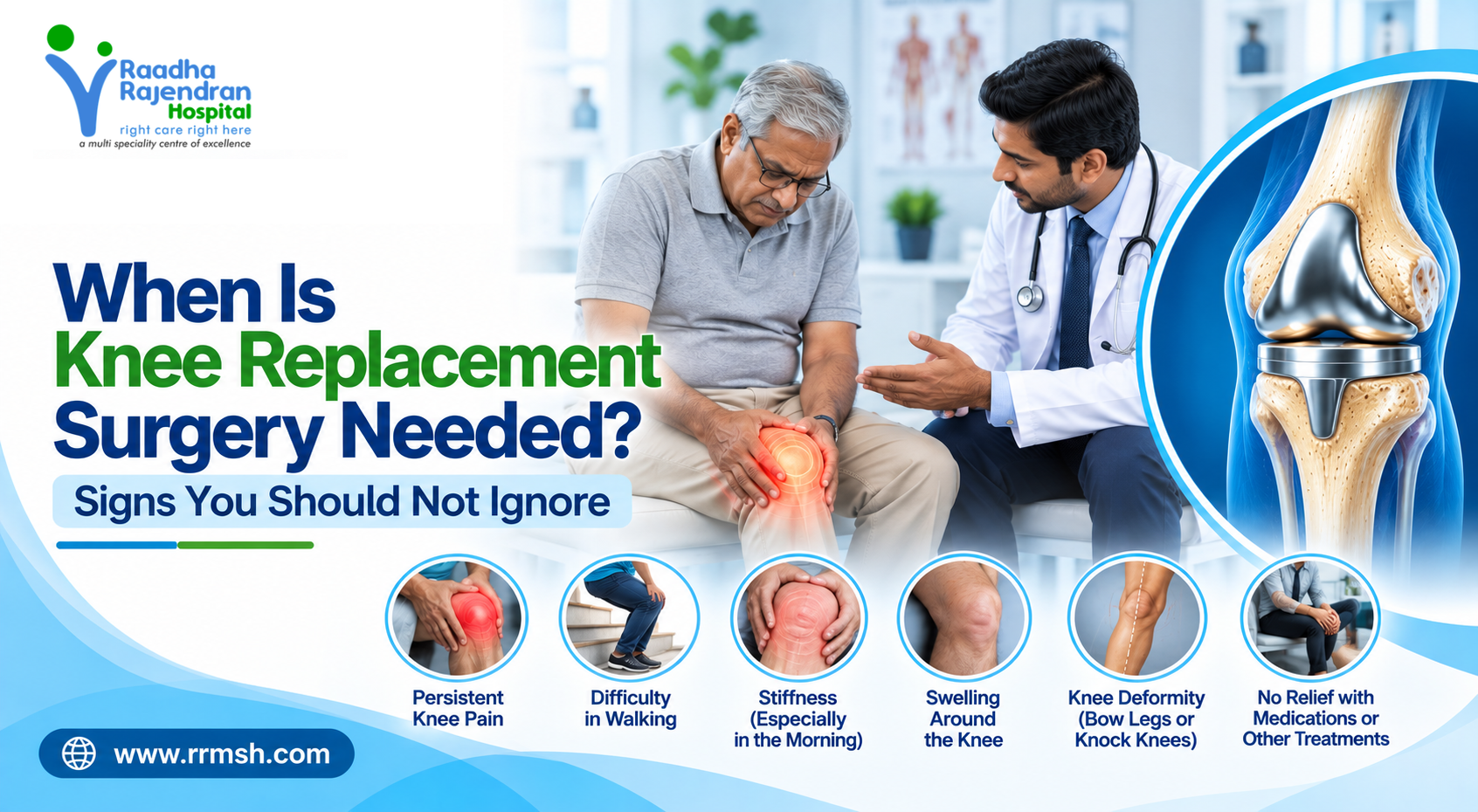
Severe pain during everyday tasks is a key sign. If walking across a room or getting up from a chair hurts, your joint may have serious damage.
2. Pain While Resting or Sleeping
Mild discomfort usually stops when you sit down. Advanced joint damage causes pain even during rest. Throbbing pain at night that breaks your sleep is a warning sign.
3. Long-Lasting Swelling
Puffiness following physical activity is expected. Persistent puffiness that cannot be alleviated using an ice pack or by resting indicates joint inflammation.
4. Visible Deformity or Stiffness
As cartilage wears thin, your leg shape can change. Your knee may bow inward or outward. Severe stiffness can also stop you from bending your leg fully.
5. No Relief from Other Care
Doctors try conservative options first. However, if physical therapy and medication stop helping, you must ask when is knee replacement needed.
6. Instability or Giving Way
A damaged joint can feel weak. If your knee locks up or gives way while walking, it creates a serious risk of falling.
7. Emotional Impact
Pain has effects on your emotions and your mental health. If pain hinders you from participating in activities and interacting with others, then you should see a doctor.
Exploring Non-Surgical Knee Arthritis Treatment Options
Professionally trained physicians conduct tests on all types of conservative treatments before suggesting surgical intervention for knee arthritis. Some of the most popular methods are as follows:
- Medicines: Medicine that decreases pain and swelling.
- Physical Therapy: Exercise will help strengthen the muscles around the joint.
- Injection: Injection reduces the pain temporarily and lubricates the joint.
- Weight Loss: Weight loss reduces pressure on the knees.
When these methods fail, a specialist can help determine when is knee replacement needed.
Types of Knee Surgery: Partial vs. Total Knee Replacement
When basic care fails, knee surgery offers a proven way to relieve pain. Doctors usually consider two main options when patients experience knee replacement symptoms:
Partial Knee Replacement
If damage is limited to one section of the joint, a partial replacement works well. The surgeon replaces only the damaged area and leaves healthy tissue untouched. This option allows for a smaller incision and faster recovery.
Total Knee Replacement
A total knee replacement becomes essential if the injury becomes widespread in the joint. In a total knee replacement, worn-out bone surfaces are removed, and metal and plastic implants are attached. This rebuilds a smooth joint surface.
Discussing these options helps you decide when is knee replacement needed.
Benefits of Timely Joint Surgery
Delaying care can lead to other health problems. Inactivity causes weight gain, muscle loss, and weak bones. Deciding when is knee replacement needed brings real benefits:
- Long-lasting Relief: Complete relief is experienced by most from their arthritis pain.
- Enhanced Mobility: One can go back to walking, swimming, and performing activities.
- Perfect Alignment: The surgery fixes bowed legs and ensures proper alignment.
- More Independence: Living without pain lets you enjoy life again.
Take the First Step Toward Pain-Free Living
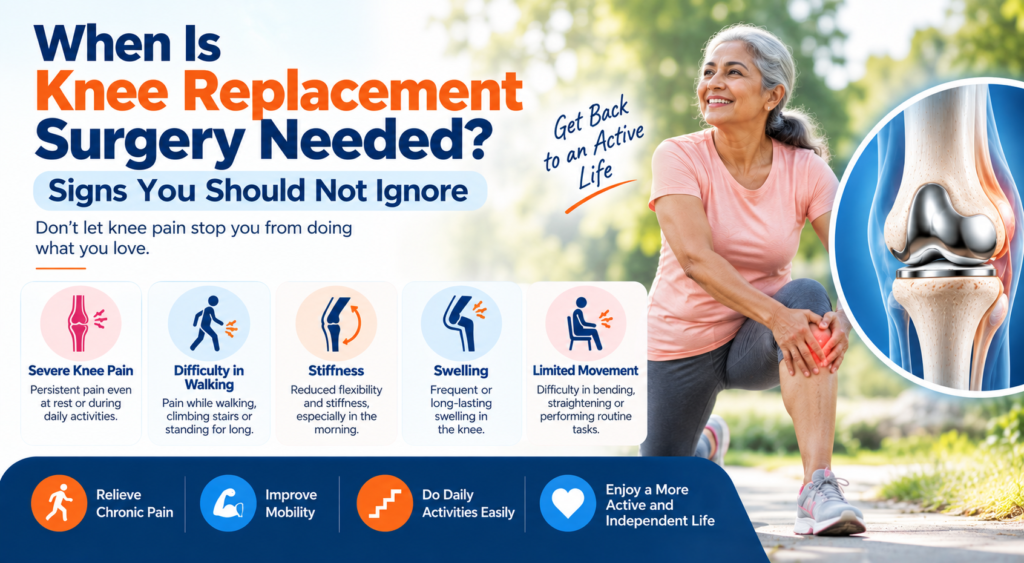
You do not have to live with constant joint pain. Knowing when is knee replacement needed lets you take action early. Talk to an orthopedic doctor today to find the right path back to easy movement.
 Visit RRMSH today and take the first step toward better health and wellness
FAQs:
When you have difficulty performing your daily activities due to pain, experience pain while sleeping, develop changes in the joint, and stop responding to medication.
The primary symptoms of knee replacement consist of deep joint pain, stiffness in the morning, swelling, grinding sounds, and weak legs.
Modern artificial joints are very durable. The life expectancy of a total knee replacement is 15-20 years or even longer.
People usually start walking with support within one day after knee surgery. The full recovery takes 6-12 weeks.
Yes, knee arthritis can be treated using exercise, weight loss, and injection which helps in delaying the surgery for a number of years.